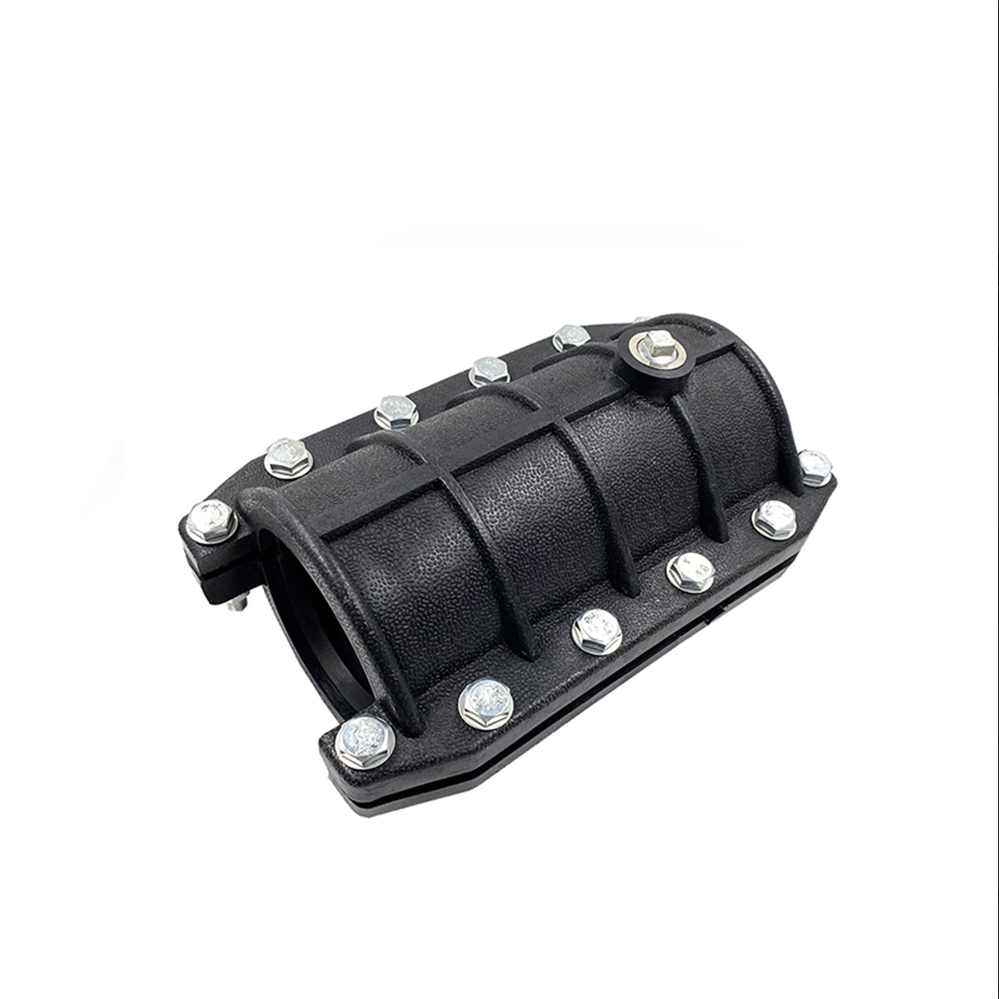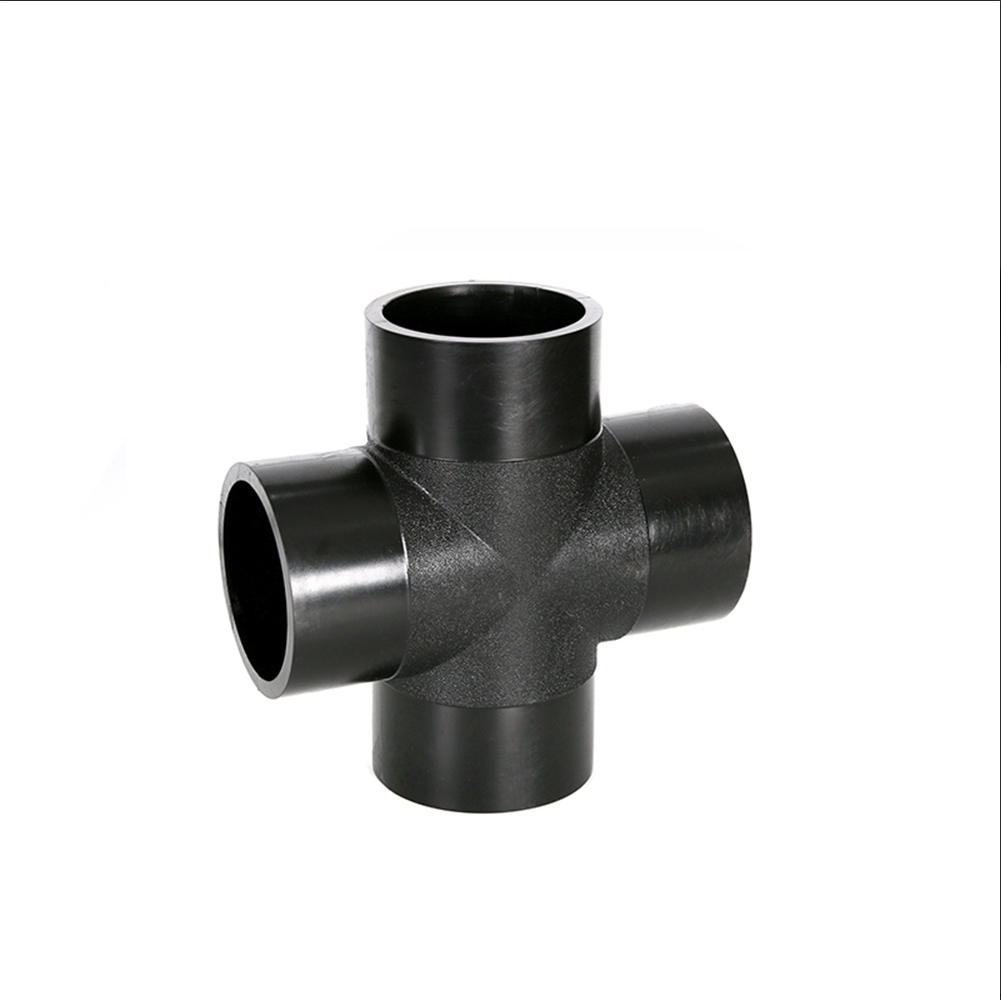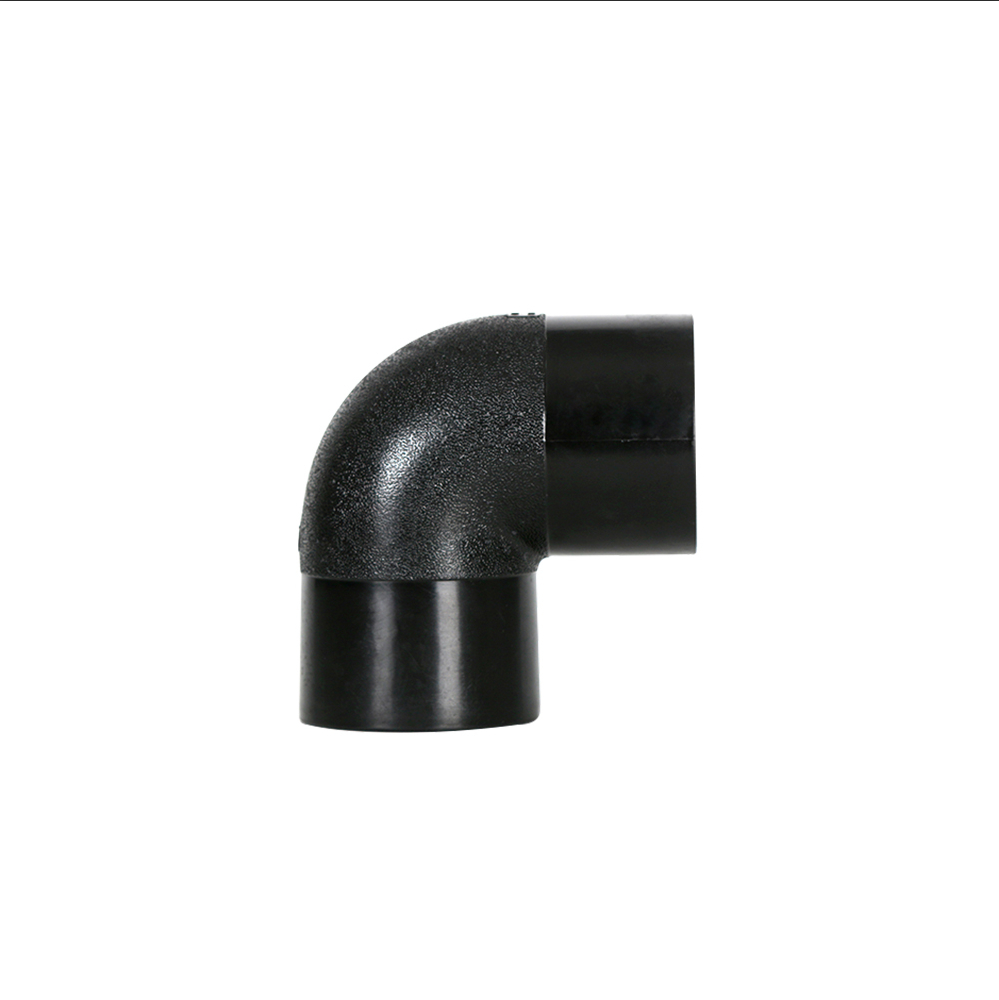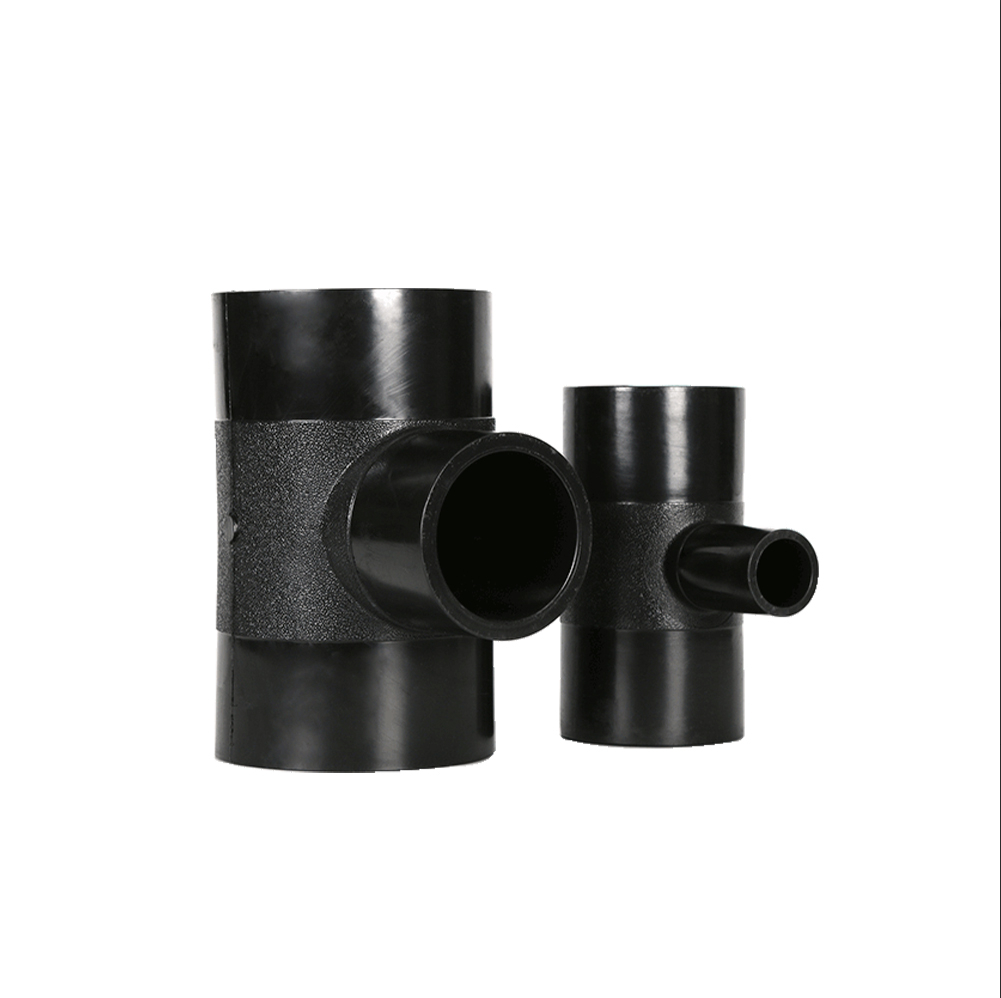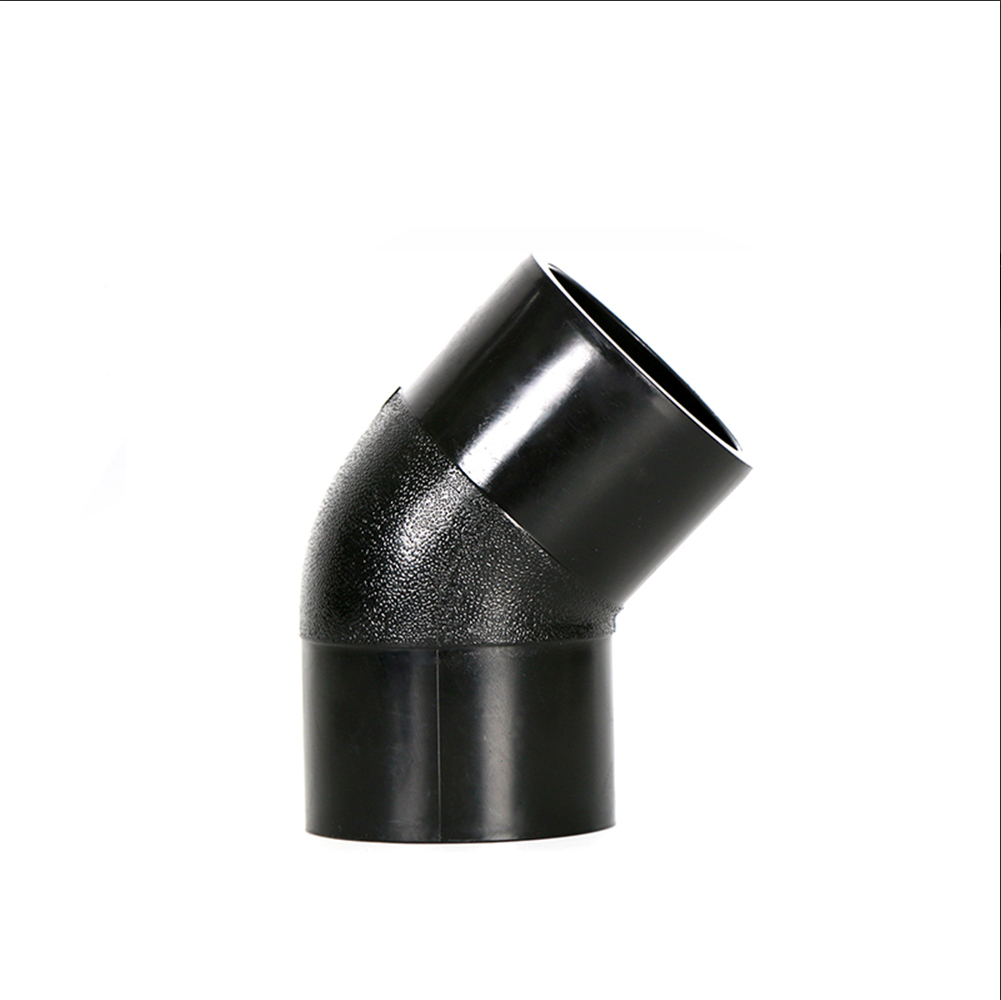
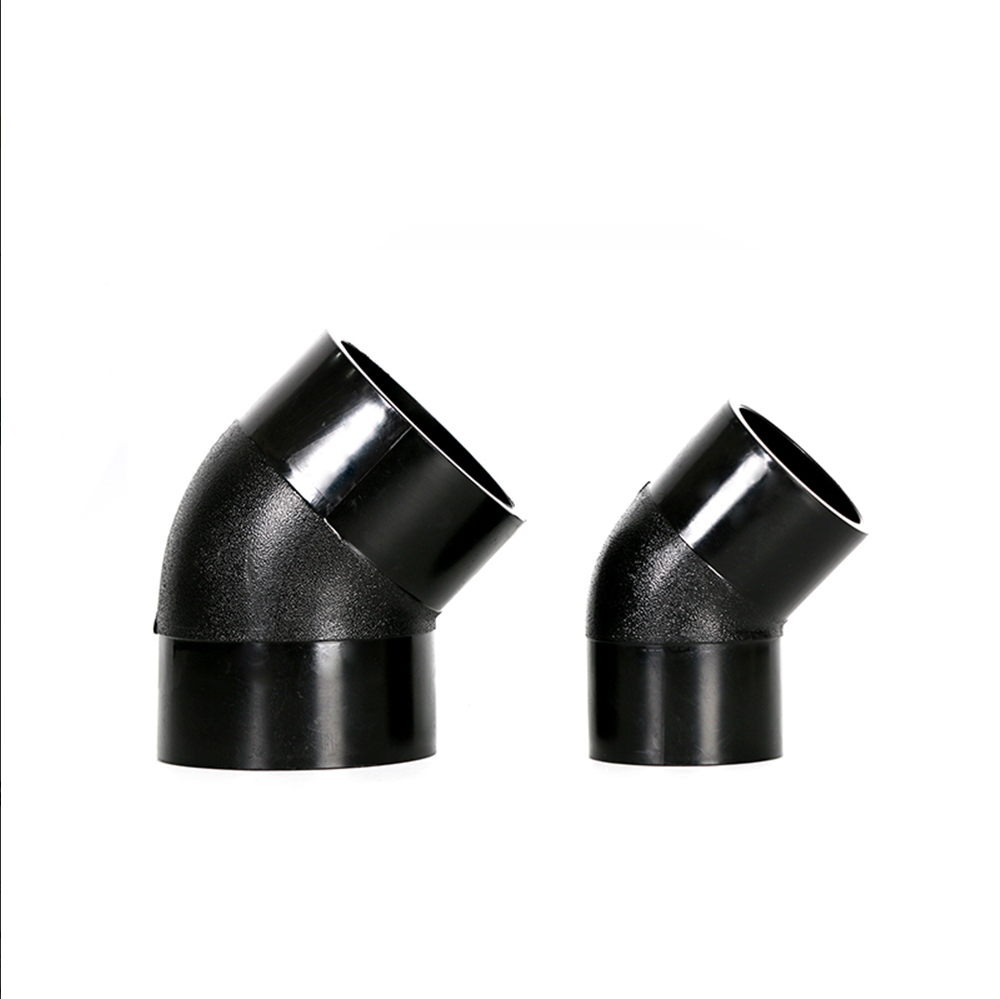
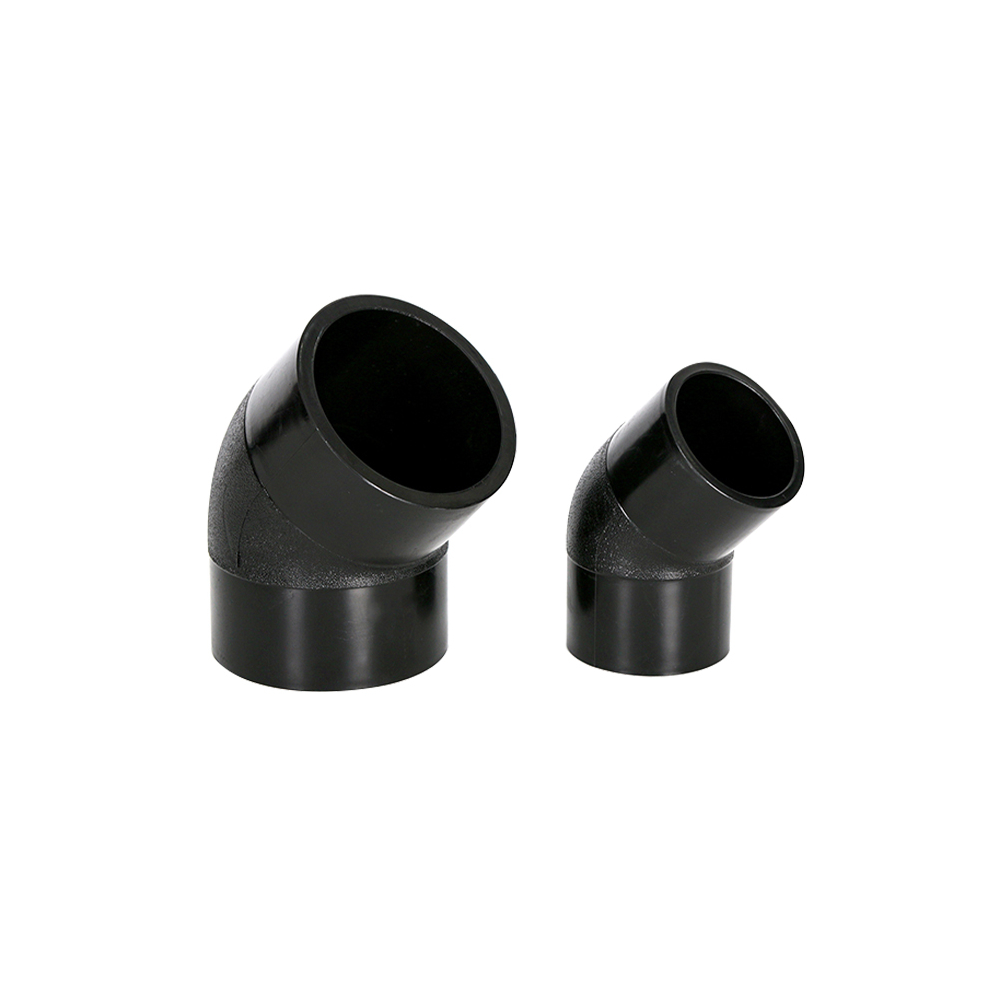
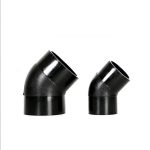
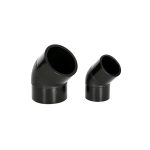
- Good wear resistance
HDPE material has good wear resistance and can resist the wear and tear of particulate matter, extending the service life of the pipeline system. - Corrosion resistance
HDPE material has excellent corrosion resistance and can resist the attack of acids, alkalis, solvents and other chemicals. This makes HDPE 45 degree Elbow very suitable for pipe systems with corrosive media. - Light and easy to install
HDPE 45˚Elbow is lighter than metal Elbows and is easy to transport and install. They usually use hot-melt connection technology and the installation process is simple and fast. - Good fluid properties
HDPE material has a smooth inner surface, which reduces fluid resistance and pressure loss and improves the fluid transmission efficiency of the pipeline system. - Excellent environmental adaptability
HDPE 45˚Elbow can adapt to different environmental conditions, including high temperature, low temperature, high humidity, etc. They have a low coefficient of thermal expansion and remain dimensionally stable as temperatures change.
Application Scope
- Mining piping system
- Agricultural irrigation system
- Drainage piping system
- Chemical piping system
- Building piping system
FAQ
What is the installation method of HDPE 45˚Elbow?
HDPE 45˚Elbow is usually joined using hot melt technology. This requires the use of a special hot melt machine and hot melt joints to hot melt HDPE pipes and Elbows. Before installation, be sure to follow the manufacturer’s installation guidelines and specifications.
What is the difference between HDPE 45˚Elbow and HDPE 90˚Elbow?
Due to the different bending angles, HDPE 45˚Elbow and HDPE 90˚Elbow have different effects on fluid transmission. HDPE 45˚Elbow has lower fluid resistance and pressure loss than HDPE 90˚Elbow, so HDPE 45˚Elbow can be selected in applications with higher fluid transmission requirements.