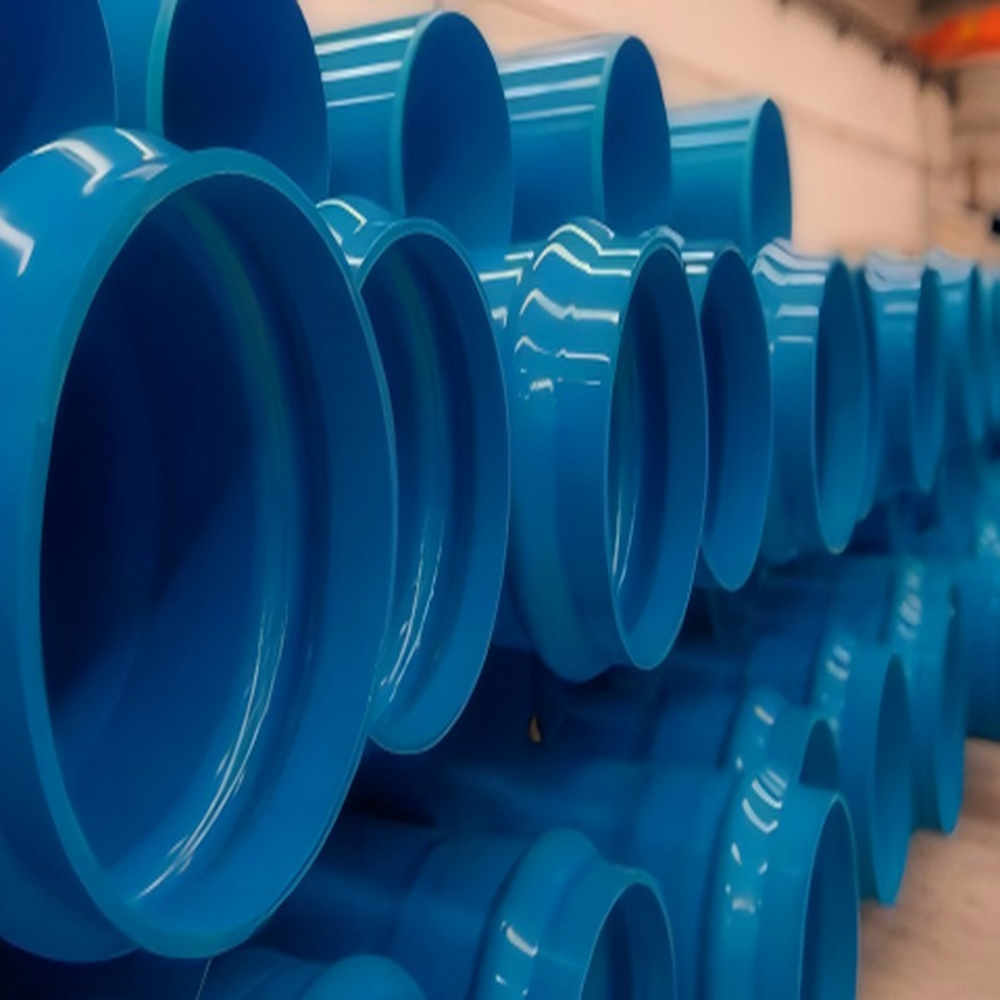
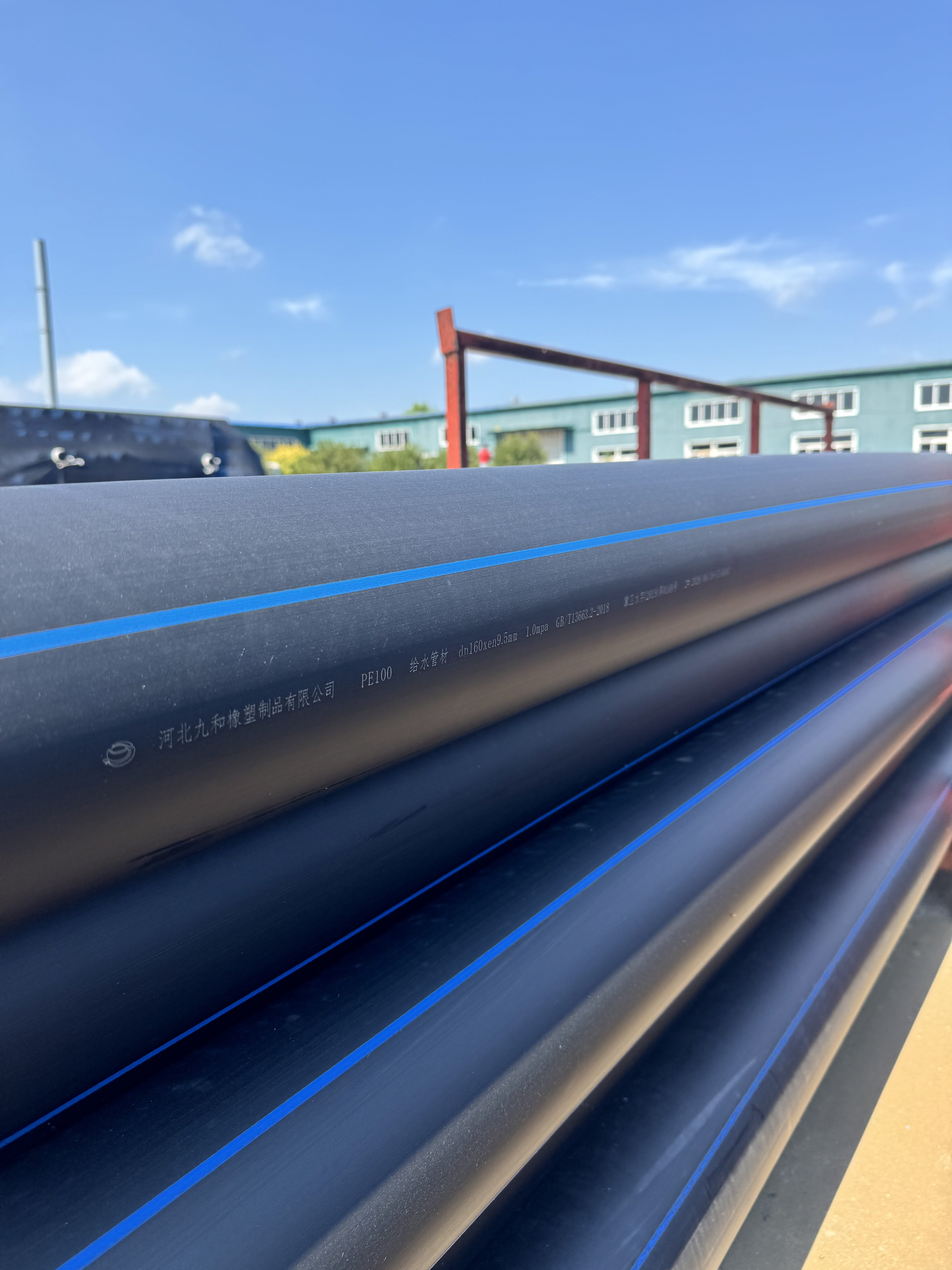
PVC-O vs PVC-U is a common specification question, and the short answer is this: they are the same base material, but PVC-O is biaxially oriented, so it reaches a higher pressure rating with a thinner, lighter wall. Specify PVC-U for low-pressure distribution and drainage where cost dominates; specify PVC-O for pressure water mains where higher PN, lighter handling or longer lay lengths matter. The detail and a head-to-head table follow.
What PVC-U and PVC-O actually are
PVC-U (unplasticized PVC) is standard rigid PVC with no plasticizer. It is extruded in a normal wall thickness and is the low-cost workhorse for cold potable water distribution, drainage and irrigation mains.
PVC-O (oriented PVC) starts as a PVC-U billet. The billet is heated until soft, then expanded in a die and biaxially oriented — stretched in both the hoop and axial directions. This aligns the polymer chains, so the finished pipe is stronger in both directions than the PVC-U it came from. Same material, different structure.
Head-to-head comparison
| Api | PVC-U | PVC-O |
|---|---|---|
| Typical pressure rating | up to PN16 | up to PN25 (Kalasi 500) |
| Wall for the same PN | matolu ange | thinner |
| Mamafa | heavier | roughly 40–50% lighter |
| Impact resistance | ma'olalo ange | ma'olunga ange |
| Jointing | solvent cement / rubber ring | rubber ring / solvent cement |
| Cost per metre | ma'olalo ange | ma'olunga ange |
| Best use | distribution, fakatafe vai, irrigation | pressure water mains |
Pressure and wall thickness
For the same outside diameter, PVC-O holds a higher pressure with a thinner wall. PVC-U typically tops out around PN16, while PVC-O can reach PN25 (Kalasi 500). Because the wall is thinner for the same duty, PVC-O uses less material — but that material is more highly engineered, so the pipe still costs more per metre.
Weight and handling
PVC-O is roughly 40–50% lighter than PVC-U for the same duty. On a project that means more metres per truck, easier manual handling, fewer joints and faster laying. On long transmission lines the transport and handling saving can be significant.
Impact resistance
PVC-O has higher impact resistance than PVC-U. It tolerates rougher handling and tougher trench conditions, which matters on site where pipes are moved, stacked and lowered into trenches.
Jointing
Both pipes use rubber-ring push-fit or solvent-cement joints. PVC-O mains are most often push-fit, which is fast and forgiving on site. Always follow the manufacturer’s insertion depth and expansion-gap instructions.
When to choose PVC-U
- The line is low pressure (PN10–PN16) and cost is the main driver.
- You need drainage, sewer or irrigation mains rather than a high-pressure transmission line.
- Solvent-cement joints suit the site and the crew is familiar with them.
When to choose PVC-O
- You need a higher pressure rating (up to PN25 / Kalasi 500) on a cold-water main.
- Transport and handling cost matters — the lighter wall means more metres per truck and easier laying.
- You want better impact resistance for rough handling and trench conditions.
Standards and certificates
For PVC-O, reference GB/T 41422-2022 and ISO 16422-2:2024 (25 pā / 25 °C cold water). For PVC-U, confirm the applicable standard for your market. Always cite the current version with its year and part number, and keep your certificates on file. A superseded standard does not invalidate an old certificate — only update the standard number on marketing and bid documents.
Totongi: material vs installed
PVC-O costs more per metre than PVC-U, but the lighter wall can reduce transport and handling cost and allow longer lay lengths, so the installed cost gap is often smaller than the material cost gap. Compare installed cost, not just pipe price.
Ngaahi koloa fekau'aki
- Paipa PVC-O — mains PVC 'oku fakatefito 'i he 'omi 'o e ma'olunga (Fetongi 'aki 'a e URL 'o e peesi koloa PVC-O 'i ho'o saiti .).
- Paipa ma'u'anga vai PVC-U — fefeka momoko-vai mo e paipa 'o e drainage ..
FAQ
Is PVC-O stronger than PVC-U?
ʻIo. PVC-O is biaxially oriented, which raises both hoop and impact strength, so it can hold a higher pressure with a thinner wall than PVC-U.
Can PVC-O and PVC-U be joined together?
They can be connected with the right transition fitting or a mechanical coupling. Do not solvent-weld PVC-O to PVC-U directly — use a proper adaptor.
Is PVC-O more expensive?
The pipe costs more per metre than PVC-U, but the lighter wall can reduce transport and handling cost and allow longer lay lengths, so the installed cost gap is often smaller than the material cost gap.
Can PVC-O be used for hot water?
ʻIkai. Like PVC-U, PVC-O is for cold water, mo ha mafana 'o e sevesi 'i he takatakai 'i he 100. 45 °C maximum.
Which is better for drinking water?
Both are suitable for potable water. Choose PVC-U for low-pressure distribution and PVC-O for higher-pressure mains; confirm the potable-water certification required in your market.