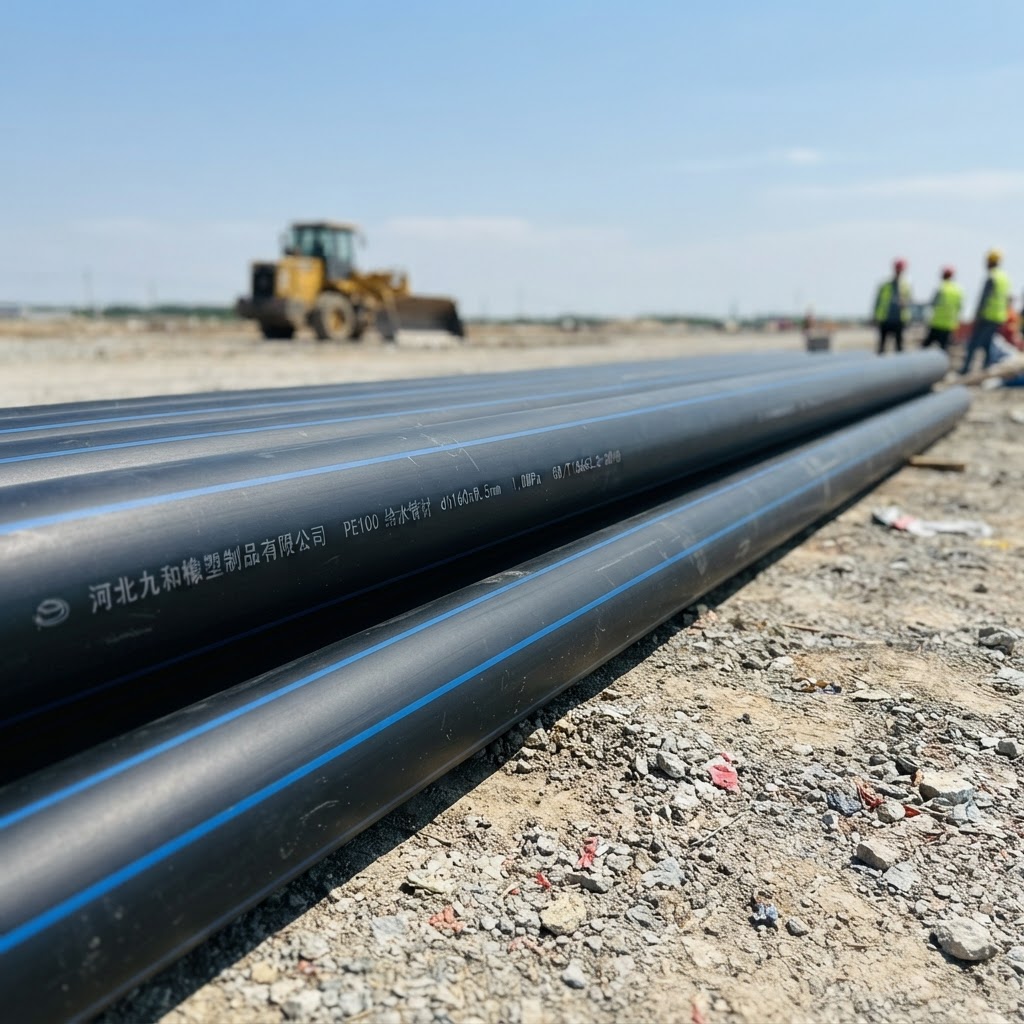
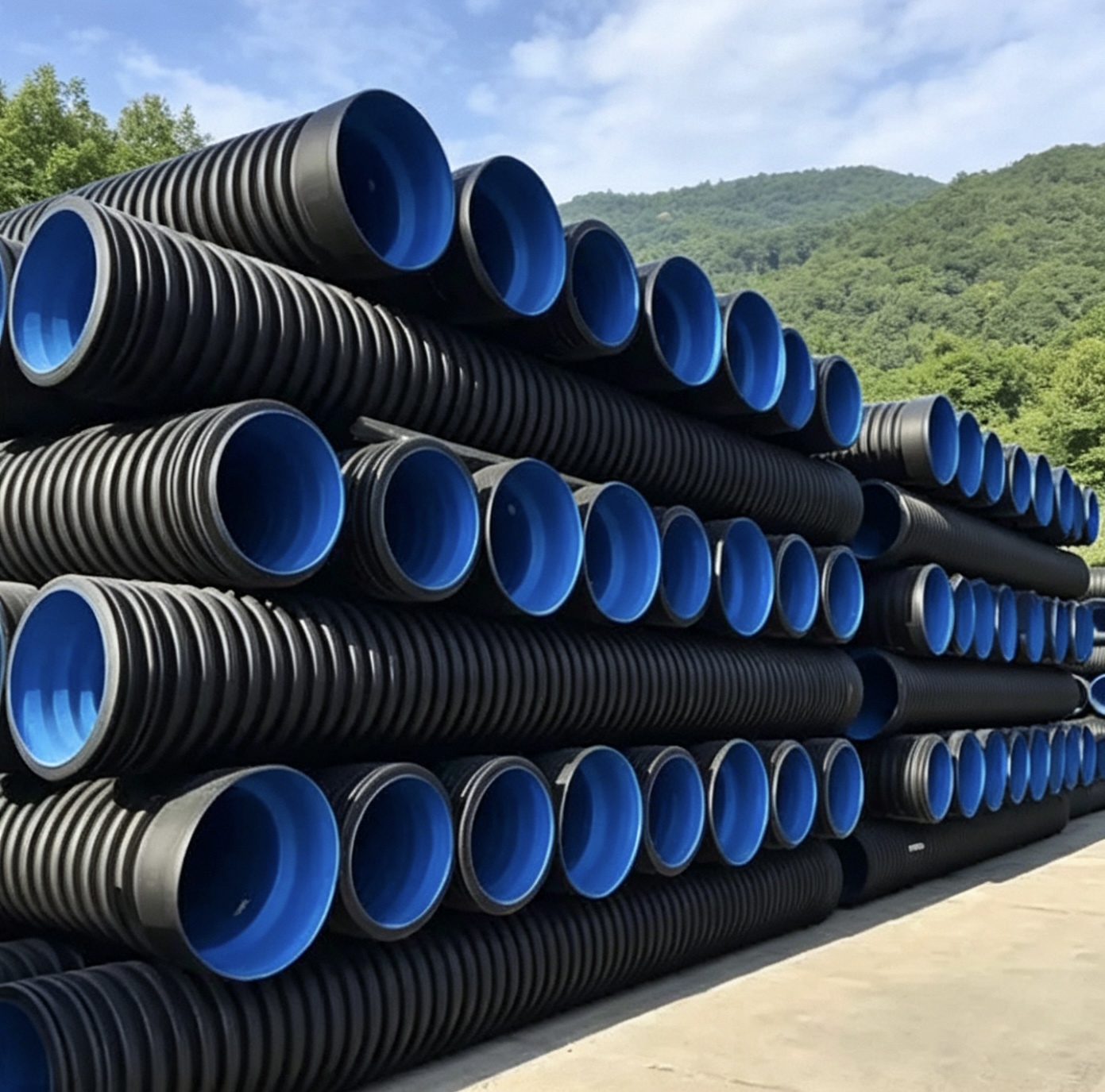
HDPE pipe has become the preferred material for marine and subsea applications due to its corrosion resistance, flexibility, mo e 50+ year service life in seawater environments. From desalination plants and seawater intake to offshore outfalls and port infrastructure, HDPE pipe outperforms traditional materials in harsh marine conditions. HDPE Paipa ki he ngaahi polokalama 'i tahi
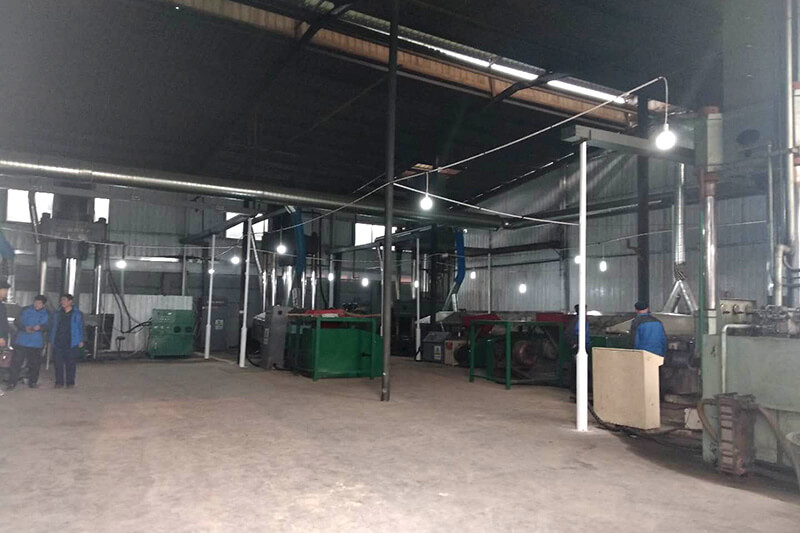
Hepei Jiuhe Lapa & Ko e ngaahi koloa pelesitiki Co., Ltd. manufactures HDPE pipes with 16 ta'u 'o e a'usia, 'ave ki tu'apule'anga ki he 30+ countries including coastal regions in the Middle East, Tonga-hahake ʻo ʻĒsiá, mo ‘Afilika .. Our HDPE pipes meet ISO 4427, ASTM F714, and other international standards for marine applications.
Why HDPE Pipe Is Ideal for Marine Applications
HDPE pipe outperforms steel, ductile iron, and concrete in seawater conditions. Here are the main reasons marine engineers specify HDPE:
- Corrosion resistant in seawater — HDPE does not rust, pit, or corrode when exposed to salt water, brackish water, or marine sediments.
- No cathodic protection required — Unlike steel pipe, HDPE does not need cathodic protection systems, saving installation and lifetime maintenance costs.
- Flexible and fatigue resistant — HDPE handles wave action, tidal movement, and seabed settlement without cracking.
- UV stabilized — Black HDPE with 2-2.5% carbon black resists UV degradation for above-deck and surface marine installations.
- Leak-proof fused joints — Butt fusion and electrofusion create joints as strong as the pipe wall, eliminating leakage critical for marine environmental protection.
- Lightweight for offshore — HDPE weighs 1/8 of steel pipe, reducing transportation and installation costs for offshore projects.
- Marine organism resistant — Smooth HDPE interior resists marine biofouling and barnacle attachment compared to metal pipe.
- 50+ ta'u 'o e mo'ui 'o e ngaue — Properly installed HDPE marine pipe lasts 50+ years in cold and temperate seawater environments.
Common Marine Applications for HDPE Pipe
| Tohi kole | Taiamita angamaheni | Fa'ahinga Paipa |
|---|---|---|
| Seawater intake | DN500-1600 mm | HDPE PE PIPE PN10-PN16 |
| Desalination plant feed | DN315-800 mm | HDPE PE PIPE PN10-PN16 |
| Marine outfall | DN400-1200 mm | HDPE PE PIPE PN10-PN16 |
| Port water supply | DN110-315 mm | HDPE PE PAIPA PN10 |
| Shipyard utility lines | DN63-160 mm | HDPE PE PAIPA PN10 |
| Offshore platform water | DN63-250 mm | HDPE PE PIPE PN10-PN16 |
| Aquaculture intake/outflow | DN110-500 mm | HDPE PE PIPE PN6-PN10 |
| Submarine outfall diffuser | DN200-630 mm | HDPE PE PAIPA PN10 |
Seawater Intake Systems
HDPE pipe is widely used for seawater intake at desalination plants, power stations, mo e ngaahi fale ngaue .. Typical installations use DN500 to DN1600 HDPE pipe with butt fusion joints, often installed using:
- Open trench seabed installation — Pipe is floated into position, then sunk into a pre-dredged trench and backfilled with sand or gravel.
- Horizontal directional drilling (HDD) — Pipe is pulled through a drilled bore under the seabed, suitable for beach approaches where trenching is impractical.
- Sinking method — Pipe strings are floated to the installation site, then filled with water to sink into position.
Marine Outfall Systems
HDPE outfall pipes discharge treated wastewater, cooling water, or brine from desalination plants into the sea. Outfall pipelines typically extend 1-5 km offshore with a diffuser section at the end. HDPE is preferred because:
- Fused joints eliminate leaks that would contaminate marine environment
- HDPE handles seabed settlement and wave loading
- 50+ year service life reduces replacement frequency
- Resists internal corrosion from saline wastewater
Material Selection for Marine HDPE Pipe
Marine applications require careful material selection:
| Naunau | MRS (MPa) | Best Application |
|---|---|---|
| PE100-RC | 10.0 | Fokotu'u 'o e Trenchless, no sand bedding, marine outfalls |
| PE100 | 10.0 | Standard marine applications with proper bedding |
| PE80 | 8.0 | Low-pressure marine applications, aquaculture |
PE100-RC (Resistance to Crack) is recommended for marine installations with no sand bedding, HDD pulls, or high external loading. Standard PE100 is suitable for most marine applications with proper installation.
Pressure Ratings for Marine Pipe
Pressure ratings depend on installation depth, internal pressure, and external loads:
- PN6. (6 pā) — Low-pressure aquaculture, surface seawater transfer
- PN10 (10 pā) — Standard seawater intake, outfalls at moderate depth
- PN12.5 (12.5 pā) — Deepwater outfalls, pump discharge lines
- PN16 (16 pā) — Deep subsea installations, high-pressure offshore
For most seawater intake and outfall applications, PN10 or PN12.5 HDPE pipe is sufficient. PN16 is reserved for deep offshore or high-pressure pump discharge applications.
Jointing Methods for Marine HDPE Pipe
Three jointing methods are used in marine installations:
- Fusion 'o e butt — The standard method for marine HDPE pipe DN63 and above. Creates joints as strong as the pipe wall. Suitable for factory prefabrication of long pipe strings for towing and sinking.
- Fakafehokotaki faka'uhila — Used for field connections, branch connections, mo e ngaahi fakalelei .. Especially useful for offshore connections where butt fusion equipment is impractical.
- Flanged connections — Used for connections to valves, pumps, ngaahi meʻa fakapipiki, and structures. PE-to-steel flange adapters allow connection to existing metal pipelines.
For marine outfalls and intake systems, butt fusion is the standard for the long pipeline sections, with flanged connections at the beach riser and diffuser.
Installation Methods
Marine HDPE pipe can be installed using several methods:
1. Sinking Installation
The most common method for offshore marine pipelines. Pipe strings are welded on shore, floated to the installation site, then flooded and sunk into a pre-dredged trench or onto the seabed. Ballast weights or sand bags are added to hold the pipe in place.
2. Horizontal Directional Drilling (HDD)
Used for beach approaches where open-cut trenching is impractical. The HDPE pipe is pulled through a drilled bore under the beach and seabed, emerging offshore in a pre-dredged exit pit. HDPE’s flexibility and fused joint strength make it ideal for HDD pulls.
3. S-Lay or J-Lay Methods
For offshore installations, pipe strings are welded on a lay vessel and lowered to the seabed as the vessel moves forward. HDPE can be used for moderate-depth offshore installations using these methods.
Design Considerations
Several factors must be considered when designing marine HDPE pipe systems:
- Negative buoyancy — HDPE pipe is lighter than water, so ballast (typically concrete collars or weight-coated sections) is required to keep the pipe submerged.
- Wave and current loading — HDPE pipe must be designed to withstand hydrodynamic forces from waves and currents. Burying the pipe in a trench provides protection.
- Temperature derating — HDPE pipe pressure rating decreases at higher temperatures. For surface seawater (typically 25-30°C), apply 20-30% derating factor.
- UV protection — Black HDPE with 2-2.5% carbon black resists UV for decades. Avoid storing HDPE pipe in direct sunlight for extended periods.
- Marine growth — HDPE resists biofouling but does not eliminate it. Periodic cleaning may be required for intake screens.
Why Choose Hebei Jiuhe for Marine HDPE Pipe?
- Complete range from DN63 to DN1600
- PE100 and PE100-RC materials available
- ISO 9001, CE, and marine-grade certifications
- Black UV-resistant compound for marine environments
- Factory prefabrication of pipe strings up to 500m
- Fakahū ki tuʻapuleʻanga ki he 30+ ngaahi fonua 'oku 'i ai 'enau ngaahi tohi kakato .
- 16 ta'u 'o e a'usia 'i hono ngaohi 'o e paipa HDPE .
- Ngaahi sipinga ta'etotongi ki he kau fakatau taau
Ngaahi Fehuʻi ʻoku Faʻa ʻEke
How long does HDPE pipe last in seawater?
Properly installed HDPE pipe has a service life of 50+ years in seawater. PE100 and PE100-RC materials resist corrosion, biological attack, and chemical degradation. Marine growth on the outside does not affect pipe integrity.
Can HDPE pipe be used for desalination plant feed lines?
ʻIo. HDPE pipe is the standard material for desalination plant seawater intake and brine outfall lines. It handles saline water at moderate temperatures (up to 40°C with derating) and resists the chemical attack from chlorine and anti-scalant additives used in desalination.
What is the maximum depth for HDPE marine pipe?
HDPE pipe can be used at depths up to 100 meters with proper design. Beyond this depth, the external hydrostatic pressure exceeds the standard pipe collapse rating. For ultra-deep applications, special heavy-wall HDPE or composite pipe is required.
Does HDPE pipe need cathodic protection?
ʻIkai. HDPE is a non-conductive material and does not require cathodic protection. This is one of its main advantages over steel pipe for marine installations. Steel fittings and flange adapters connected to HDPE pipe may still require cathodic protection at the metal-HDPE interface.
How do you ballast HDPE marine pipe?
HDPE marine pipe is ballasted using concrete weight coatings, bolt-on concrete collars, or fabricated saddle weights. The ballast must provide enough negative buoyancy to overcome the pipe’s natural buoyancy while allowing safe handling during installation.
Contact Us for Marine HDPE Pipe
Need HDPE pipe for a marine project? Send us your specifications for technical review and factory-direct pricing.
WhatsApp: +86 19539065330
'Imeili: sean@siuhepipe.com
Fale ngaahi koloa: Vahefonua Wei, Kolo Xingtai, Vahefonua Hebei, Siaina
'Oku mau tali 'i loto 'i he 2019. 12 ngaahi houa. Free technical consultation and product samples available for qualified buyers.