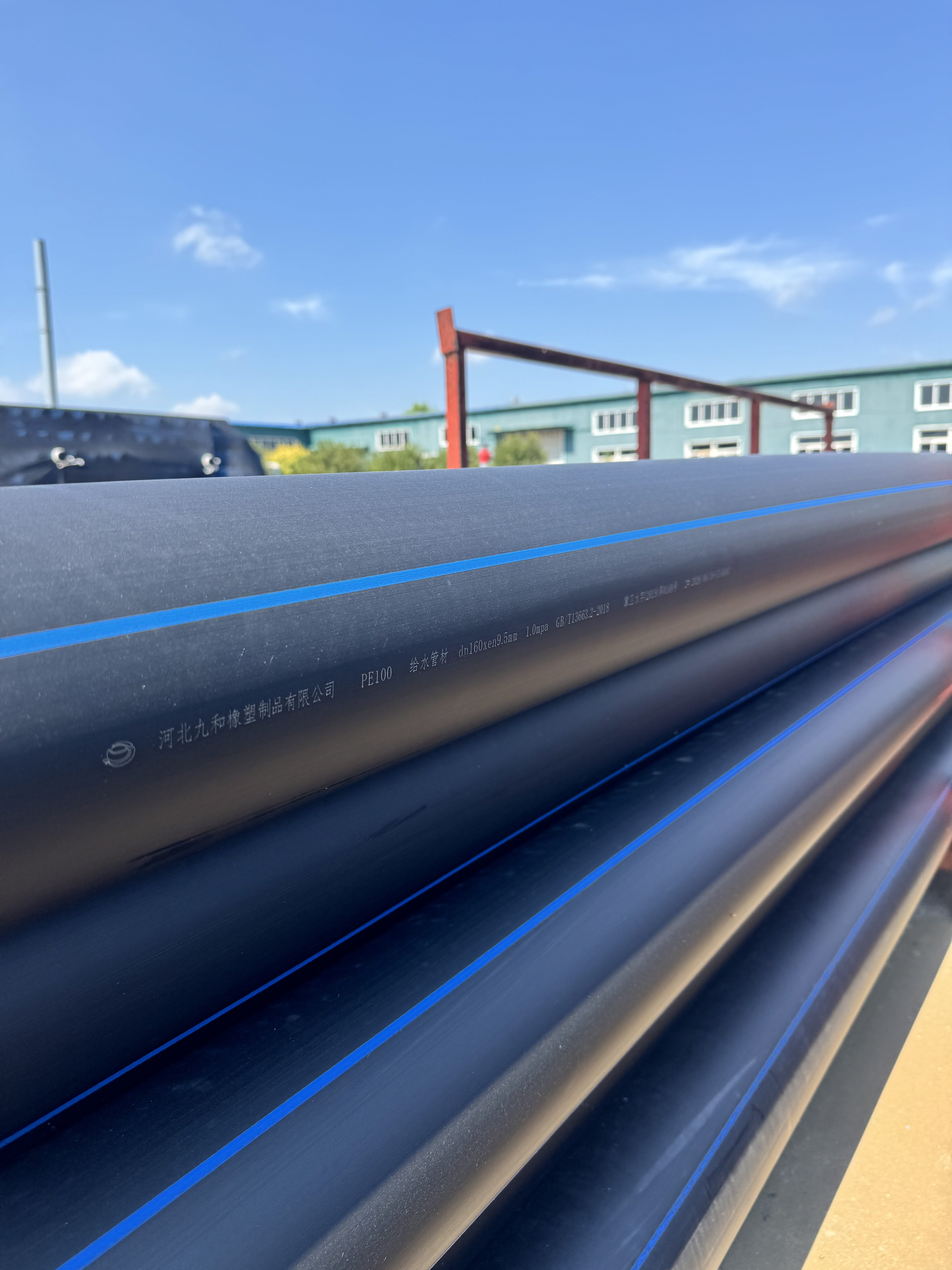
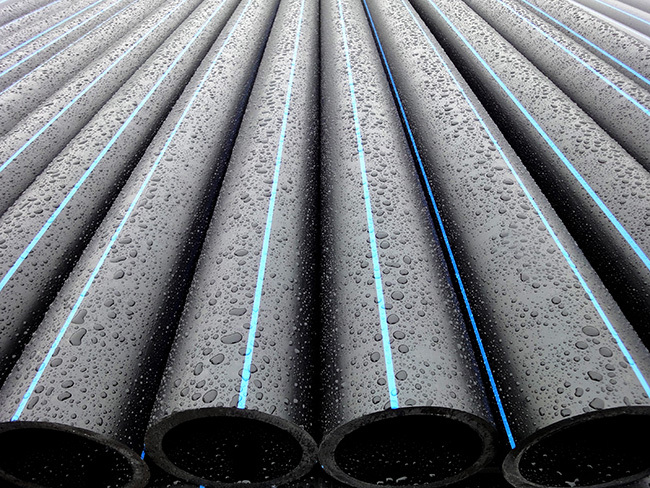
PVC-O pipe — oriented PVC, sometimes called MOPVC — is a polyvinyl chloride pressure pipe whose molecular structure has been stretched into an aligned orientation during manufacturing. The result is a pipe roughly twice as strong as conventional PVC-U at the same weight, which is why water utilities specify PVC-O for high-pressure mains. This guide explains how it is made, how it performs, and what to confirm before you order.
What is PVC-O pipe?
Standard PVC-U pipe is extruded with its molecules arranged randomly. In PVC-O production the extruded pipe is reheated and expanded biaxially, pulling the polymer chains into a highly oriented structure. That alignment multiplies tensile strength and impact resistance without adding material — the wall is stretched thinner and wider, so you get more pipe per kilogram of PVC.
How orientation changes performance
| Property | PVC-U | PVC-O |
|---|---|---|
| Tensile strength | baseline | roughly double |
| Impact resistance | moderate | high — resists cracking and surge |
| Wall for the same pressure class | thicker | thinner and lighter |
| Material per metre | more | less |
| Failure mode | brittle crack | ductile, slower leak |
Pressure classes and operating limits
PVC-O is supplied in pressure classes up to PN25 (Class 500) — the top of the PVC pressure range. Because the oriented wall is thinner, a given class is reached with far less material, so the pipe is lighter to handle and lower in weight per metre. One operating limit matters for design: PVC-O is rated for water service at up to about 45 °C; above that, confirm derating with the manufacturer. Current reference standards include GB/T 41422-2022 (中国) and ISO 16422-2:2024 (international) — confirm the exact part and year your project requires before ordering.
Where PVC-O pipe is used
- High-pressure water transmission mains — the strongest class of plastic pressure main.
- Urban distribution upgrades — higher pressure and flow in a narrow, lighter pipe.
- Irrigation mainlines — pump-driven schemes with long runs and surges.
- Replacement of ageing metal mains — no corrosion, no tuberculation, restored flow.
What to confirm before ordering
- Pressure class (PN / SDR) matched to pump head and surge analysis.
- Diameter (DN) range required — confirm the range your supplier offers for your project.
- Jointing: gasket push-fit sockets are standard for PVC-O; confirm socket type and accessories.
- Standards & certificates: GB/T 41422-2022 / ISO 16422-2:2024 【部分号与年份按项目核对】 plus any potable-water certificates for your market.
- Lengths, colour, marking and MOQ — confirm per project.
Related products
- Jiuhe PVC-O pipe — oriented PVC pressure pipe for water mains.
- Jiuhe PVC-U pipe — standard rigid PVC for general pressure lines.
- Jiuhe pipe homepage — full product range.
FAQ
What does PVC-O stand for?
PVC-O means oriented PVC — pipe that has been stretched biaxially during manufacture so its molecules align, making it roughly twice as strong as PVC-U at the same weight.
Is PVC-O stronger than PVC-U?
Yes. For the same pressure class, PVC-O needs a much thinner wall, so it is lighter and uses less material; its impact resistance is also far higher.
What is the maximum pressure class of PVC-O pipe?
PVC-O is available up to PN25 (Class 500), the top of the PVC pressure range — suitable for high-pressure transmission and pump mains.
What temperature can PVC-O handle?
It is rated for water service up to about 45 °C. For hotter service, confirm temperature derating with the manufacturer.
Is PVC-O suitable for drinking water?
The base material is the same PVC family used for potable mains. Request the potable-water certificate for your market before ordering.