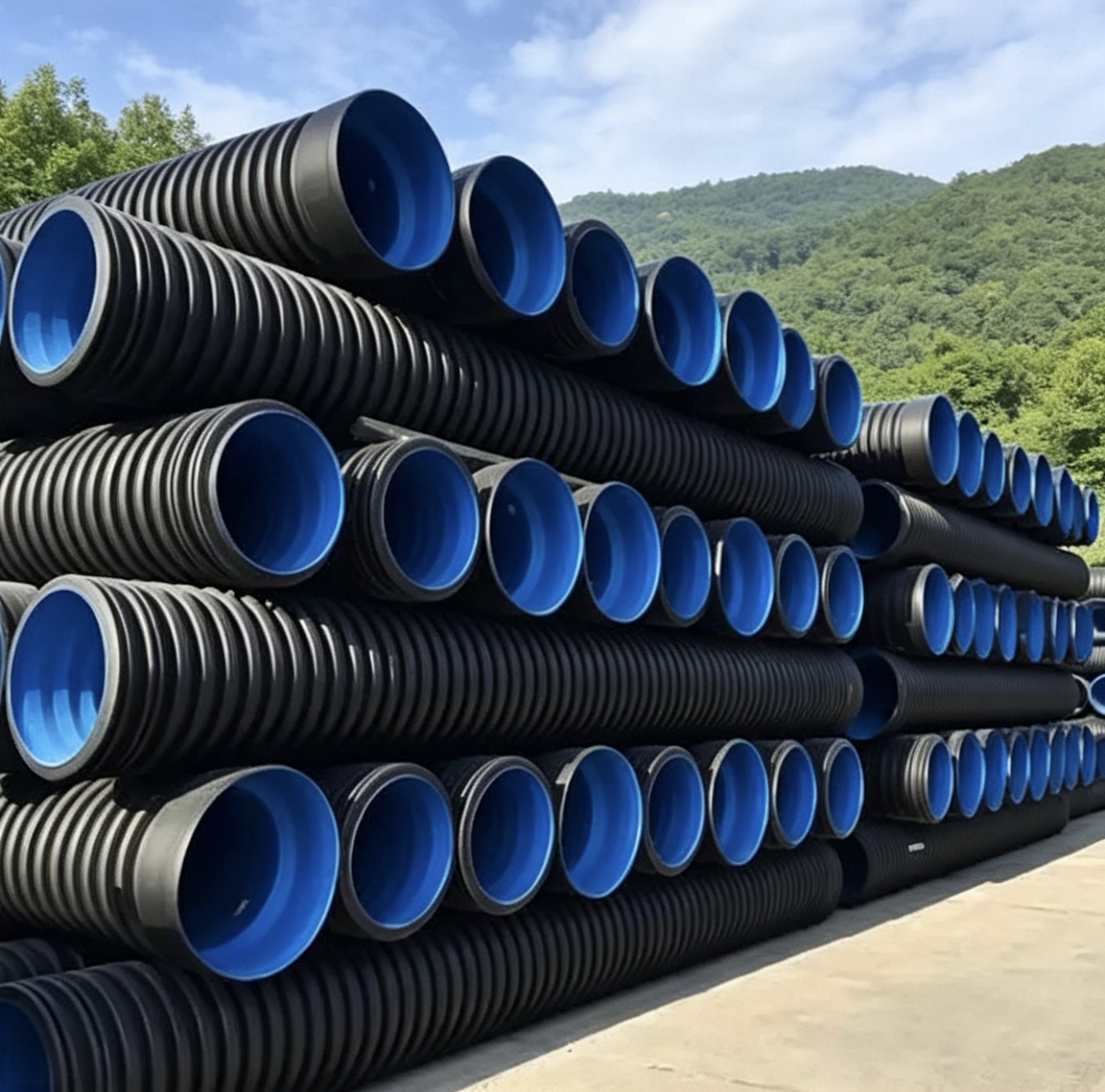
Choosing the right connection method is one of the most important decisions in any HDPE pipeline project. Two methods dominate the industry: HDPE butt fusion そして electrofusion. Both create strong, leak-proof joints — but they differ significantly in cost, equipment, installation speed, and ideal use cases.
河北九和ゴム & プラスチックプロダクツ株式会社, 株式会社. manufactures HDPE pipes and fittings with 16 years of experience, exporting to 30+ countries. This guide compares HDPE butt fusion vs electrofusion so you can choose the right method for your project.
What Is HDPE Butt Fusion?
HDPE butt fusion is a joining method where the ends of two HDPE pipes or fittings are heated with a special plate until they reach the optimal melting temperature. The heated ends are then pressed together under controlled pressure to form a single, homogeneous joint.
The process follows these steps:
- Square and clean the pipe ends
- Insert pipe ends into the butt fusion machine
- Align and face the ends with a facing tool
- Heat both ends with a hot plate (typically 210°C ± 10°C)
- Remove the hot plate and bring the ends together under pressure
- Cool the joint under maintained pressure
The result is a joint with strength equal to or greater than the pipe itself. Butt fusion is the most widely used method for joining HDPE pipes in municipal water, gas, and industrial applications worldwide.
What Is Electrofusion?
Electrofusion uses specialized fittings that contain built-in heating coils. When an electrofusion controller applies an electrical current, the coils heat up and melt the HDPE material inside the fitting, fusing the pipe and fitting together.
The process follows these steps:
- Clean and scrape the pipe surface (remove 0.1-0.2mm oxide layer)
- Insert the pipe into the electrofusion fitting
- Connect the fitting to an electrofusion controller
- The controller automatically applies the correct voltage and time
- Allow to cool before moving or pressurizing
Electrofusion fittings include saddles, elbows, tees, and couplers — making them ideal for branch connections, repairs, and situations where butt fusion equipment cannot be used.
HDPE Butt Fusion vs Electrofusion: Key Differences
| Factor | Butt Fusion | Electrofusion |
|---|---|---|
| Joint Strength | Equal to or greater than pipe wall | 85-100% of pipe strength |
| Equipment Cost | High (butt fusion machine) | Moderate (controller + fittings) |
| Fitting Cost | Low (standard fittings) | High (electrofusion fittings) |
| Installation Speed | Fast for long straight runs | Slower per joint |
| Ideal Diameter | DN63 and above | DN20 to DN630 |
| Skill Required | Moderate-High (certified operator) | Moderate (controller auto-controls) |
| Portability | Heavy, requires vehicle transport | Portable, field-friendly |
| Branch Connections | Not possible | Yes (saddle fittings) |
| Repair Applications | Limited | Excellent |
| Field Conditions | Requires flat surface, power | Flexible, works in trenches |
When to Choose HDPE Butt Fusion
HDPE butt fusion is the preferred method when:
- Long straight pipe runs — Butt fusion is most efficient for continuous pipelines. Long runs of DN90mm or larger can be fused at rates of 50-100 joints per day with experienced crews.
- Budget is a primary constraint — Standard butt fusion fittings cost significantly less than electrofusion fittings. If you are installing thousands of meters of pipe, the cost savings compound quickly.
- Large diameter pipes — Butt fusion is the standard method for DN200 and above. The joint quality improves with larger diameters.
- New municipal water projects — City water supply projects worldwide specify butt fusion as the default installation method for HDPE pipelines.
- Gas distribution networks — Gas utilities require butt fusion for main pipeline construction due to its superior joint integrity and traceability.
When to Choose Electrofusion
Electrofusion is the preferred method when:
- Limited space or complex layouts — Electrofusion fittings can be installed in tight spaces, existing structures, or where pipe alignment is difficult.
- Branching and tapping — Saddle electrofusion fittings allow you to create branch connections without cutting into the main pipeline.
- Repair and rehabilitation — Electrofusion repair saddles can fix leaks, cracks, or damaged sections without replacing entire pipe segments.
- Small diameter connections — Electrofusion is more practical for DN20 to DN110 pipes where butt fusion equipment is oversized.
- High-precision projects — The automated controller eliminates operator variability, ensuring consistent joint quality every time.
- Trenchless installation — Electrofusion is the standard method for slip lining, pipe bursting, and other trenchless rehabilitation methods.
Cost Comparison
Total installed cost depends on project scale, diameter, and site conditions. Here is a general comparison for DN110 HDPE water pipe:
| Cost Item | Butt Fusion | Electrofusion |
|---|---|---|
| Equipment investment | $3,000-15,000 | $500-2,000 |
| Per-joint fitting cost | $2-5 | $15-40 |
| Labor cost per joint | $5-15 | $10-25 |
| Power requirement | High (3-5 kW) | Low (1-2 kW) |
| Per-joint total cost | $10-30 | $30-70 |
For projects over 1,000 joints, butt fusion typically saves 30-50% on fitting costs. Electrofusion saves on equipment investment but carries higher per-joint material costs.
Joint Quality and Testing
Both methods produce reliable joints when performed correctly. However, there are differences in quality assurance:
- Butt fusion joints can be visually inspected for a complete “bead” around the circumference. Destructive testing (burst test, tensile test) confirms quality. Most utilities require fusion operator certification.
- Electrofusion joints are monitored by the controller, which records voltage, current, and time for each joint. This creates a digital quality record — valuable for utility projects and regulatory compliance.
Industry Standards
Both HDPE butt fusion and electrofusion are governed by international standards:
- ISO 21307 — Polyethylene (PE) pipes and fittings for the supply of gaseous fuels or water: fusion jointing procedures
- DVS 2202-1 — Imperfections at butt welds of PE pipes: glossary and classification
- <
…(truncated)…