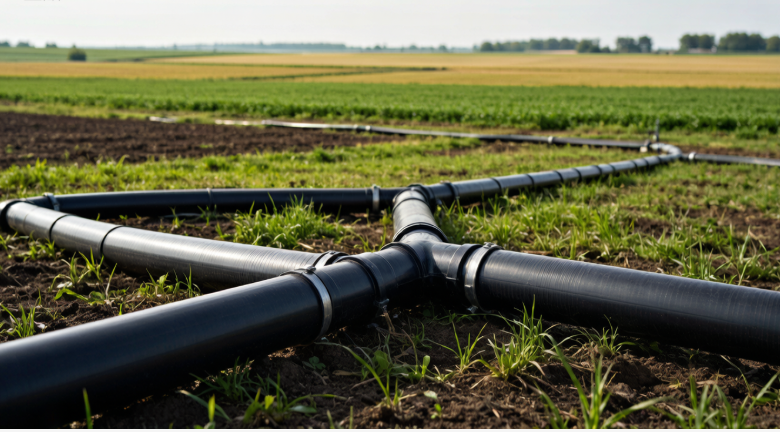
HDPE double wall corrugated pipe is the modern solution for underground drainage, sewage, and stormwater systems. Its unique two-wall structure combines high ring stiffness with lightweight construction, making it the preferred choice for municipal and industrial projects.
Hebei Jiuhe Rubber & Plastic Products Co., Ltd. manufactures HDPE double wall corrugated pipe with 16 years of experience and ISO 9001 certification. Our products serve drainage projects in over 30 countries, including the Middle East, Southeast Asia, and Africa.
What is HDPE Double Wall Corrugated Pipe?
HDPE double wall corrugated pipe (also called DWC pipe or HDPE DWC pipe) is a drainage pipe with a smooth inner wall and a corrugated outer wall. The two-wall structure is made from high-density polyethylene (HDPE) in a single extrusion process.
Structure
- Inner wall: Smooth, low-friction surface for optimal flow
- Outer wall: Corrugated profile for high ring stiffness
- Material: HDPE (high-density polyethylene)
- Connection: Socket and spigot with rubber ring or fusion joint
Advantages of HDPE Double Wall Corrugated Pipe
1. High Ring Stiffness
The corrugated outer wall provides SN4, SN8, or SN12.5 ring stiffness, allowing HDPE double wall corrugated pipe to withstand heavy traffic loads at shallow burial depths.
2. Lightweight
HDPE double wall corrugated pipe weighs about 1/10 of concrete pipe of equivalent diameter. This reduces transportation, handling, and installation costs significantly.
3. Hydraulic Efficiency
The smooth inner wall (Manning coefficient of 0.009) provides excellent flow characteristics, reducing the pipe diameter required for a given flow rate.
4. Corrosion Resistance
HDPE is immune to chemical corrosion, making it suitable for industrial wastewater, seawater, and aggressive soil conditions.
5. Long Service Life
HDPE double wall corrugated pipe has a design service life of 50+ years, with many installations exceeding 70 years in service.
6. Easy Installation
Lightweight pipe sections with rubber ring joints allow fast installation without heavy equipment. Installation rates of 100–200 meters per day are typical.
Technical Specifications
| Specification | Value |
|---|---|
| Material | HDPE (high-density polyethylene) |
| Standards | GB/T 19472.1, ISO 21138, EN 13476 |
| Diameter Range | DN110mm – DN1200mm |
| Ring Stiffness | SN4, SN8, SN12.5 |
| Length | 6m standard (customizable) |
| Color | Black outer, light interior (or customized) |
| Connection | Socket with rubber ring, or fusion |
| Service Life | 50+ years |
| Temperature Range | -40°C to +60°C |
Applications of HDPE Double Wall Corrugated Pipe
Municipal Drainage
HDPE double wall corrugated pipe is the standard material for municipal stormwater and sewage networks. It replaces traditional concrete and PVC pipes in many applications.
Road Drainage
Road and highway drainage systems use HDPE double wall corrugated pipe for cross-drains, side drains, and stormwater collection.
Industrial Wastewater
Factories, mining operations, and chemical plants use HDPE double wall corrugated pipe for industrial wastewater discharge due to its chemical resistance.
Landfill Drainage
HDPE double wall corrugated pipe is approved for landfill leachate collection and drainage systems.
Agricultural Drainage
Farmland drainage systems use HDPE double wall corrugated pipe for sub-surface drainage and irrigation return flow.
Building Drainage
Large residential and commercial developments use HDPE double wall corrugated pipe for stormwater and sewer connections.
Installation Guide
1. Trench Preparation
- Trench width: pipe diameter + 30 cm minimum
- Trench depth: as per design, typically 80–200 cm
- Bedding: 10–15 cm of sand or fine soil
- Ensure trench bottom is level and free of debris
2. Pipe Laying
- Lower pipe sections carefully into the trench
- Inspect each pipe for damage before installation
- Check that the rubber ring is properly seated in the socket
- Align the pipe and push the spigot into the socket
3. Joint Assembly
- Clean the socket and spigot ends
- Apply lubricant to the spigot end
- Align the pipe axially with the previously laid pipe
- Push the spigot into the socket using a lever or come-along
- Check that the joint is fully inserted (mark on spigot should be flush with socket edge)
4. Backfilling
- Initial backfill: 30 cm of sand or fine soil above the pipe
- Compact by hand or with light equipment
- Final backfill: excavated material, free of large rocks
- Compact in layers of 20–30 cm
5. Testing
For gravity drainage systems, conduct a low-pressure air test (typically 0.3 bar for 5 minutes) or water infiltration test per local standards.
Ring Stiffness Selection
| Ring Stiffness | Application |
|---|---|
| SN4 | Light traffic, shallow burial, landscape drainage |
| SN8 | Standard municipal drainage, road drainage |
| SN12.5 | Deep burial, heavy traffic, airports |
HDPE Double Wall Corrugated Pipe vs Concrete Pipe
| Property | HDPE DWC Pipe | Concrete Pipe |
|---|---|---|
| Weight | 1/10 of concrete | Heavy |
| Installation Speed | Fast | Slow |
| Corrosion Resistance | Excellent | Poor (requires lining) |
| Flow Capacity | High (smooth interior) | Lower (rough interior) |
| Service Life | 50+ years | 30–50 years |
| Cost | Medium-high | Low-medium |
Why Choose Hebei Jiuhe HDPE Double Wall Corrugated Pipe?
- 16 years of HDPE pipe manufacturing experience
- Full compliance with GB/T 19472.1, ISO 21138, EN 13476
- ISO 9001 certified factory
- Complete range from DN110 to DN1200
- SN4, SN8, and SN12.5 ring stiffness available
- Rubber ring or fusion joint options
- Export to 30+ countries with full documentation
- Competitive pricing and flexible MOQ
Frequently Asked Questions
What is the difference between SN4, SN8, and SN12.5?
SN4, SN8, and SN12.5 refer to ring stiffness (4, 8, and 12.5 kN/m²). Higher SN values mean higher load-bearing capacity. SN8 is the standard for municipal drainage.
What is the maximum diameter available?
HDPE double wall corrugated pipe is available from DN110 to DN1200mm. For larger diameters, consider HDPE spiral wound pipe or other options.